Friday, October 22, 2010

Bee Knowledgeable: Honeybees in Winter

The weather has dramatically cooled here where the Boojum Institute is located in the mountains of Southern California. The summer season has officially passed into autumn and this last pattern of storms has brought quite the chill. For the last week, we have had nightly low temperatures from 34F to 38F (1-3C).

So what is happening in the bee yard with this weather and temperature change? We discussed some of the behaviors in honeybees as the seasons cycle around the year in our post Seasons of the Honeybee.

Photo of some beehives in winter:
 photo: Boris Romanov


Honeybees, like most insects, are exothermic or cold-blooded animals. This means that they cannot maintain a warm body temperature on their own. Exothermic animals must find heat fro their environment. For example, reptiles are exothermic as well, and they find warmth by resting on hot, sun-warmed rocks. Humans are endothermic, or warm-blooded. Our bodies naturally generate warmth from within.

Most insects hibernate, or go to sleep, when it gets cold. Honeybees do not. They are unique in the insect world for this. While an individual honeybee is exothermic, the collective colony is actually endothermic. When the temperature drops below 54-57F (12-14C), honeybees gather in a group forming a ball of bees called a cluster. The bees within the cluster all shiver their fight muscles. Honeybees are able to detach their flight muscles from their wings. This way, when they vibrate those muscles with their wings detached, their wings do not move. The muscles simply move against each other and this generates heat. When the entire colony of bees does this within the hive, they can generate enough heat and maintain the hive temperature at around 70F (21C).

Infrared photo of beehives showing heat distribution within the hive:
 photo: Boris Romanov

The bees will cluster over their stored food. As the bees eat the honey from one section of comb they will move to another, full section of honeycomb. The entire cluster will move from one section of honeycomb to another as they eat their winter stores. The honey and pollen they have stored for the winter gives them the energy they need to constantly shiver their wing muscles and keep their colony warm and healthy.

The cluster of bees can adapt as the weather changes. As the temperature gets colder, the cluster will contract. The bees will pack as tightly together as possible, contracting the cluster and generating the maximum possible warmth. When the temperature warms some, the cluster will expand and grow larger. It is the same number of bees, but they allow more space between individuals and do not generate as much heat. By expanding and contracting the cluster, honeybees are able to maintain an almost constant temperature within the hive.

There is one more element that allows bees to survive the winter without hibernating. Towards the end of summer, the new bees that hatch are actually “winter bees”. They are physiologically different than summer bees. Where summer bees are lighter and smaller for long flights and foraging for food, winter bees are born larger and fattier. The fattier bodies allow them to survive the cold with less food. Their blood is also different. The winter bee has a different blood protein profile than summer bees. This also helps them to survive the colder temperatures.

During the cold, winter months, honeybees will stop producing brood. The eggs and brood require higher temperatures to develop and hatch. So in most climates, the queen stops laying eggs and brood production stops while the temperature is too cold outside. Also, the healthier and larger colonies have a better chance of winter survival. The larger the cluster they can form (basketball size), the more warmth they can generate. The smaller colonies can only form smaller clusters (softball sized) and therefore generate less heat and have more bee deaths over the winter.

Here is a photo of bees clustering:


For a more in-depth look at what happens in honeybee colonies over the winter, check out this fascinating article at Beesource:
The Thermology of Wintering Honeybee Colonies

Thursday, September 30, 2010

Bee Knowledgeable Answers: Bee Venom

Have you ever wondered what bee venom is made of? Or why some people are so much more sensitive to bee stings than other? Is bee venom similar to the venom of other stinging insects, like ants and wasps?
Earlier this year we took a look at the defensive behaviors of honeybees. Let's take a closer look now at the substance that makes their defense such an effective one.

What is bee venom made of?
Honeybee venom is an acidic, bitter substance that bees inject into their perceived attacker using their stinger. When a bee stings something, she injects about .1 mg of the colorless fluid through her stinger. This venom, when injected under the skin, can cause pain, swelling, and many other reactions.

The venom is also called apitoxin and is made up of many proteins and peptides that have many different properties, or effects.  In fact, it is made of over 20 active substances. The main part of bee venom are several proteins, called melittin, that cause pain. Melittin is also one of the most potent anti-inflammatory agents known. It is up to 100 times stronger than hydrocortisol. The  Schmidt Sting Pain Index rates the pain of stings from 78 species of ants, bees, and wasps on a scale of 1-4. A honeybee’s sting is scored at 2 on the scale and is “Like a matchhead that flips off and burns on your skin.”

Other parts of apitoxin include agents that act on the adrenal glands and stimulate cortisol production. There are also small amounts of neurotoxin and anti-inflammatory agents. However, besides melittin, the other major component of apitoxin is histamine. Histamine is what causes allergic reactions in animals. Allergies are overreactions of the immune system.

What is the effect of bee venom on humans?
Humans have different levels of sensitivity to the histamine in bee venom. Statistically, 0.5% to 5% of people have extreme allergic reactions to bee stings. These people are extremely sensitive, or hypersensitive, to the bee venom histamine. An adult with little sensitivity could take over a thousand stings. For a hypersensitive person, only one sting could result in serious to deadly effects.

Some people have been stung many times in their life with only the normal, mild effects and then are later stung and have a severe reaction. Hypersensitivity to bee venom can develop later for some people. Also, people who are on anti-inflammatory treatments can have a very serious reaction to stings. Beekeepers who have never had problems with stings have reported moderate to seriously increased sensitivity after consistently taking NSAIDS like ibuprofen and naproxen (Advil and Aleve).


A bee sting is generally only mildly painful with a little bit of swelling and itching. These symptoms only last for a few days at most. For those who are hypersensitive, or allergic, a single sting can cause serious swelling of the throat and paralysis of the respiratory system, possibly leading to death. Some people actually get stung by bees or injected with bee venom on purpose as part of apitherapy.

 photo: Wausberg

 photo: Wausberg

Six minutes after the stinger is removed:
photo: Wausberg
 
One day later:
photo: SuperManu

Why would someone WANT to be stung? How is bee venom collected for medical use?
Apitherapy has been practiced for centuries and uses the products of bees for health benefits. Apitherapy includes the use of honey, pollen, propolis, royal jelly, and venom from honeybees. Honeybee venom is used in apitherapy to help alleviate medical conditions such as arthritis and multiple sclerosis. Bee venom is even used for people with severe bee allergies in very small doses to help them build immunity to bee stings. These healing effects have been noted for many years and now studies are being done that prove the efficacy of bee venom treatments.

Could you imagine a doctor’s office with a hive of bees, ready to use for treatments? Quite a funny picture, isn’t it? Doctor’s who practice apitherapy actually use preparations from collected bee venom. Beekeepers who collect venom for medical reasons have developed methods of collection that kill as few bees as possible. A sheet of glass and a wire grid that gives a mild electric shock is used. When the honeybee lands and gets a little shock, she stings the glass. Her stinger does not get stuck and so she will survive. The venom dries on the glass and is scraped off. The dried venom is a white to yellowish powder that can be specially prepared back into a liquid used to inject patients. Balms and ointments are also made, but do not have the same strength as an injection.

Is bee venom the same as wasp venom?
Theses two different stinging insects have similar ingredients in their venom. The major difference is the percentage of the amounts of the different substances varies between the species. Wasps have more enzymes that break down cell material. Bees have far more melittin that stimulates anti-inflammatory response. There is one chemical that bees, wasps, and ants share with plants. It is called formic acid and many plants use it for defense. It is what causes plants, like nettle, to sting when touched or poked.

Did you do any of your own research this week? What did you discover about bee venom? Use the comments and share your knowledge!

Friday, September 24, 2010

Bee Knowledgeable Questions: Bee Venom

Have you ever wondered what bee venom is made of? Or why some people are so much more sensitive to bee stings than other? Is bee venom similar to the venom of other stinging insects, like ants and wasps?

Earlier this year we took a look at the defensive behaviors of honeybees. Let's take a closer look now at the substance that makes their defense such an effective one. Let's find out about bee venom this week using the learning resources around you, like your local library.

Friday, September 17, 2010

We would like to give a profuse thanks to Strachan Apiaries for donating a New World Carniolan queen honeybee to the Honeybees and World Health program!! We appreciate your support, and your donation helps us bring the wonder of the honeybee to students and classrooms.


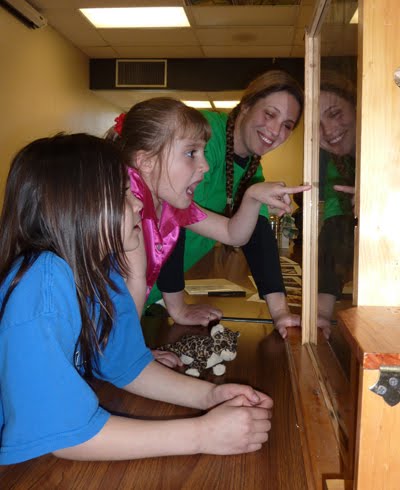
She arrived with her entourage of queen attendants this week and is being introduced to our large, three frame observation hive. Frames of eggs, brood, and food stores were chosen from the Boojum Beeyard hives and placed in the glass observation hive. They have been without a queen long enough to be ready to accept the new queen.

This is very exciting! Once the bees have accepted this new queen, the observation hive will be ready to take into classrooms to show and teach more students about honeybees and how profoundly important they are to our world’s health!


Friday, September 10, 2010

The Boojum Beeyard: Honey Harvest! Part 1

It is honey harvesting time at the Boojum Beeyard!
This week we pulled most of the honey supers off of our Boojum Bee hives. Here are some photos of harvest day:

 Kurt Merrill, chief apiculturist, points out the hive he's already started on when I get there.
photo: Robyn Young

Kurt has tacked a terry towel into the inside of a hive lid. Some scented liquid is squirted onto the towel. The bees don't like this smell and it will drive them down into the lower boxes. That way we can drive them out of a super, pull it off, and drive them down again. This way we can pull off the honey supers while leaving most of the bees in the hive.
photo: Robyn Young

photo: Robyn Young

The orange super is a honey comb super which holds "Ross Rounds", or honey comb cassettes. The bees will draw these out with comb and fill them with honey. When they are done, round honeycomb cakes will pop out yielding nicely shaped little raw comb sections.
photo: Robyn Young


photo: Robyn Young


photo: Robyn Young

photo: Robyn Young

The metal grate between the hive body and the honey super on top is called a queen excluder. The bars are too narrow for the queen to get through, but the workers can pass through just fine. This keeps brood out of the honey supers.
photo: Robyn Young

Here is the stack of honey supers ready to travel to the honey house. The towel covering the top is wet. This helps mask the smell of the honey and therefore keeps the bees from mobbing it and trying to take it all back.
photo: Robyn Young

photo: Robyn Young

photo: Robyn Young

Those six supers full of honey will yield over two hundred pounds of the sweet liquid gold. These will travel away from the beeyard to the honey house.
Then onto the extraction, the next step in the honey harvest!

Friday, September 3, 2010

Bee Knowledgeable: Seasons of the Honeybee

School has started for many of you and Summer Vacation is over. I hope everyone has had a fantastic summer! Although the weather is still warm in a lot of places, cool weather will soon come. Fall is almost here!

So what do the honeybees do as summer fades into fall? What activities are the bees engaged in to prepare for the cold, with meager (if any) food sources for months ahead? What about the other seasons of the year? How do honeybees behave during the different seasons?

Fall
Food supplies dwindle as the last blooms of the summer fade. The hive’s combs should be full of honey and pollen. The amount of food they have been able to gather and store will determine whether the colony will survive winter. The bees also gather tree sap and make into propolis. They use this thick, sticky substance to seal all the cracks inside their hive to weather-proof it. They also block most of their hive entrance, to reduce the cold wind coming in. Here is a photo of propolis along the inside the wooden cover of a beekeeper's hive box:
photo: Abalg
During this time the colony will reduce its numbers. The drone bees will be forced outside the hive and not allowed back in. They cannot work and so have no purpose during the months ahead. The food that the drones would eat will now go to the young workers and the queen. This will help ensure the colony’s survival.
In this video you can see workers bring home full pollen baskets and evicting drones from the hive:


Winter
During the cold winter months the honeybees will cluster for warmth. The entire colony gathers and generates warmth over a section of comb that has the queen, brood, and stored food. The bees on the outside of the cluster will keep close together, forming a tight seal. The cluster will maintain a temperature of 94F using a special technique. They can unhook their wings and still work their wing muscles to generate heat without moving their wings.

The queen will slow, and even stop laying eggs. On the days that it is warm enough to move, the cluster will relocate on another part of the comb that has brood and food. During especially cold winters when it stays too cold to move for long periods, the bees can die of starvation just inches away from the nearest honey sores.

The older workers will continue to die over the months of winter. It is the brood and the youngest bees that will make it through to spring.

Spring
As soon as the days grow a little warmer and the hours of light grow longer, the colony will stir. They feed the queen a little more food, stimulating her to start laying more eggs. As soon as the first flowers appear, workers start collecting food again. This stimulates more growth and the colony begins to rebuild their population.

When winter’s touch has finally faded and the spring rains have come, lush blooms emerge everywhere. The prolific availability of food helps the honeybee population grow rapidly. As the temperature grows warmer, the queen will start laying drone eggs. Once again, the colony will have drone bees. With the booming food supply, this is the season the colony’s population will quickly outgrow their hives. The rapidly increasing young bees and the presence of new drones will induce the nurse bees to make queen cups in readiness for the inevitable swarm. Soon they put eggs in those cups and the larva is fed royal jelly. The queen will leave the hive, taking part of the colony with her in a swarm. Part of the colony stays behind to rear a new queen. A new colony begins. Ideally, a colony will be able to swarm several times in spring. Here is a swarm of bees in a tree:
photo: T.Voekler

Summer
When the weather stays warm, the colony will build to their optimum population and then focus on building food supplies. The honeybees will spend their summer foraging. Summer has its own temperature extremes, but the colony must still maintain the ambient hive temperature. The bees will cool the hive on very hot days by creating a swamp cooler. They place droplets of water all over the comb inside the hive and then fan air inside by beating their wings at the entrance. As the air circulates across the water, it cools the air inside the hive.

The honeybees will spend the rest of their summer gathering honey and pollen from the various plants that are blooming. They work every long hour of light they can and store their food away. Soon fall will come, the plants will stop flowering, and the bees will have to start their winter preparations.

Nature’s seasonal cycle for the honeybees will begin anew.

Friday, August 27, 2010

Bee Knowledgeable: Seasons of the Honeybee

School has started for many of you and Summer Vacation is over. I hope everyone has had a fantastic Summer! Although the weather is still warm in a lot of places, cool weather will soon come. Fall is almost here!

So what do the honeybees do as Summer fades into Fall? What activities are the bees engaged in to prepare for the cold, with meager (if any) food sources for months ahead? What about the other seasons of the year? How do honeybees behave during the different seasons?

See what you can find out using your research resources like your local library. If you have more questions, please comment and ask us! Then join us next week with the answers. Let’s compare the facts!