Friday, September 17, 2010

We would like to give a profuse thanks to Strachan Apiaries for donating a New World Carniolan queen honeybee to the Honeybees and World Health program!! We appreciate your support, and your donation helps us bring the wonder of the honeybee to students and classrooms.


She arrived with her entourage of queen attendants this week and is being introduced to our large, three frame observation hive. Frames of eggs, brood, and food stores were chosen from the Boojum Beeyard hives and placed in the glass observation hive. They have been without a queen long enough to be ready to accept the new queen.

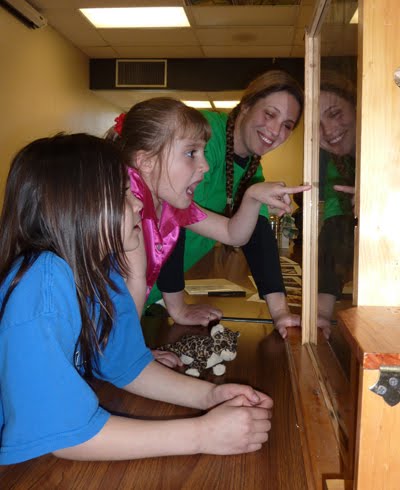
This is very exciting! Once the bees have accepted this new queen, the observation hive will be ready to take into classrooms to show and teach more students about honeybees and how profoundly important they are to our world’s health!


Friday, September 10, 2010

The Boojum Beeyard: Honey Harvest! Part 1

It is honey harvesting time at the Boojum Beeyard!
This week we pulled most of the honey supers off of our Boojum Bee hives. Here are some photos of harvest day:

 Kurt Merrill, chief apiculturist, points out the hive he's already started on when I get there.
photo: Robyn Young

Kurt has tacked a terry towel into the inside of a hive lid. Some scented liquid is squirted onto the towel. The bees don't like this smell and it will drive them down into the lower boxes. That way we can drive them out of a super, pull it off, and drive them down again. This way we can pull off the honey supers while leaving most of the bees in the hive.
photo: Robyn Young

photo: Robyn Young

The orange super is a honey comb super which holds "Ross Rounds", or honey comb cassettes. The bees will draw these out with comb and fill them with honey. When they are done, round honeycomb cakes will pop out yielding nicely shaped little raw comb sections.
photo: Robyn Young


photo: Robyn Young


photo: Robyn Young

photo: Robyn Young

The metal grate between the hive body and the honey super on top is called a queen excluder. The bars are too narrow for the queen to get through, but the workers can pass through just fine. This keeps brood out of the honey supers.
photo: Robyn Young

Here is the stack of honey supers ready to travel to the honey house. The towel covering the top is wet. This helps mask the smell of the honey and therefore keeps the bees from mobbing it and trying to take it all back.
photo: Robyn Young

photo: Robyn Young

photo: Robyn Young

Those six supers full of honey will yield over two hundred pounds of the sweet liquid gold. These will travel away from the beeyard to the honey house.
Then onto the extraction, the next step in the honey harvest!

Friday, September 3, 2010

Bee Knowledgeable: Seasons of the Honeybee

School has started for many of you and Summer Vacation is over. I hope everyone has had a fantastic summer! Although the weather is still warm in a lot of places, cool weather will soon come. Fall is almost here!

So what do the honeybees do as summer fades into fall? What activities are the bees engaged in to prepare for the cold, with meager (if any) food sources for months ahead? What about the other seasons of the year? How do honeybees behave during the different seasons?

Fall
Food supplies dwindle as the last blooms of the summer fade. The hive’s combs should be full of honey and pollen. The amount of food they have been able to gather and store will determine whether the colony will survive winter. The bees also gather tree sap and make into propolis. They use this thick, sticky substance to seal all the cracks inside their hive to weather-proof it. They also block most of their hive entrance, to reduce the cold wind coming in. Here is a photo of propolis along the inside the wooden cover of a beekeeper's hive box:
photo: Abalg
During this time the colony will reduce its numbers. The drone bees will be forced outside the hive and not allowed back in. They cannot work and so have no purpose during the months ahead. The food that the drones would eat will now go to the young workers and the queen. This will help ensure the colony’s survival.
In this video you can see workers bring home full pollen baskets and evicting drones from the hive:


Winter
During the cold winter months the honeybees will cluster for warmth. The entire colony gathers and generates warmth over a section of comb that has the queen, brood, and stored food. The bees on the outside of the cluster will keep close together, forming a tight seal. The cluster will maintain a temperature of 94F using a special technique. They can unhook their wings and still work their wing muscles to generate heat without moving their wings.

The queen will slow, and even stop laying eggs. On the days that it is warm enough to move, the cluster will relocate on another part of the comb that has brood and food. During especially cold winters when it stays too cold to move for long periods, the bees can die of starvation just inches away from the nearest honey sores.

The older workers will continue to die over the months of winter. It is the brood and the youngest bees that will make it through to spring.

Spring
As soon as the days grow a little warmer and the hours of light grow longer, the colony will stir. They feed the queen a little more food, stimulating her to start laying more eggs. As soon as the first flowers appear, workers start collecting food again. This stimulates more growth and the colony begins to rebuild their population.

When winter’s touch has finally faded and the spring rains have come, lush blooms emerge everywhere. The prolific availability of food helps the honeybee population grow rapidly. As the temperature grows warmer, the queen will start laying drone eggs. Once again, the colony will have drone bees. With the booming food supply, this is the season the colony’s population will quickly outgrow their hives. The rapidly increasing young bees and the presence of new drones will induce the nurse bees to make queen cups in readiness for the inevitable swarm. Soon they put eggs in those cups and the larva is fed royal jelly. The queen will leave the hive, taking part of the colony with her in a swarm. Part of the colony stays behind to rear a new queen. A new colony begins. Ideally, a colony will be able to swarm several times in spring. Here is a swarm of bees in a tree:
photo: T.Voekler

Summer
When the weather stays warm, the colony will build to their optimum population and then focus on building food supplies. The honeybees will spend their summer foraging. Summer has its own temperature extremes, but the colony must still maintain the ambient hive temperature. The bees will cool the hive on very hot days by creating a swamp cooler. They place droplets of water all over the comb inside the hive and then fan air inside by beating their wings at the entrance. As the air circulates across the water, it cools the air inside the hive.

The honeybees will spend the rest of their summer gathering honey and pollen from the various plants that are blooming. They work every long hour of light they can and store their food away. Soon fall will come, the plants will stop flowering, and the bees will have to start their winter preparations.

Nature’s seasonal cycle for the honeybees will begin anew.

Friday, August 27, 2010

Bee Knowledgeable: Seasons of the Honeybee

School has started for many of you and Summer Vacation is over. I hope everyone has had a fantastic Summer! Although the weather is still warm in a lot of places, cool weather will soon come. Fall is almost here!

So what do the honeybees do as Summer fades into Fall? What activities are the bees engaged in to prepare for the cold, with meager (if any) food sources for months ahead? What about the other seasons of the year? How do honeybees behave during the different seasons?

See what you can find out using your research resources like your local library. If you have more questions, please comment and ask us! Then join us next week with the answers. Let’s compare the facts!

Friday, August 20, 2010

Bee Knowledgeable: Bee Savvy!

Bee Savvy!
Here are some fun and interesting facts about honeybees...

  • The worker honeybee's brain has the densest neuropil tissue among the animal kingdom, even though it is only about the size of a sesame seed. Neuropil tissues make up most of the gray matter in animal brains. Bees have a remarkable ability to learn and remember things and are able to make complex calculations on distance travelled and foraging efficiency.
  • The queen bee can live for several years. Worker bees live for 6 weeks during the busy summer, and for 4-9 months during winter.
  • A honeybee beats its wings at an incredible 11,400 times per minute, that’s almost 200 beats per second! No wonder they have such a distinct buzzing sound when they fly. And honeybees can fly at the speed of 15 mph.
  • Honey bees have 170 odorant receptors; these are organs for smelling, like your nose. Compare that with fruit flies that only have 62 and mosquitoes that have 79 receptors. Their exceptional olfactory abilities include kin recognition signals, social communication within the hive, and odor recognition for finding food. Their sense of smell was so precise that it could make the distinction between hundreds of different floral varieties and tell whether a flower carried pollen or nectar from yards away.
  • Honeybees take on 80% of all insect pollination. Agriculture is greatly dependent on honeybees. Without them, one third of our food could not grow.
  • Honeybee colonies have a population of 20,000 to 80,000 bees!
  • Every year, each bee colony will collect up to 66 pounds of pollen for food. Where honey is the bee’s carbohydrate source, pollen is their protein.
  • Pollen is a nutrient dense food, consisting of up to 35% protein, 10% sugars, carbohydrates, enzymes, minerals, and vitamins A (carotenes), B1 (thiamin), B2 (riboflavin), B3 (nicotinic acid), B5 (panothenic acid), C (ascorbic acid), H (biotin), and R (rutine).
  • A honeybee visits somewhere around 50 to 100 flowers every day gathering nectar. To make one pound of honey, about 556 worker bees must visit around 2 million flowers.
  • A hive of bees must fly 55,000 miles to produce a pound of honey.
  • It would take approximately one ounce of honey to fuel a bee's flight around the earth.
  • Honey makes baked goods brown faster, and improves their shelf life.
  • Honeybees are the only insect that produces food eaten by man.
  • Humans have been collecting honey for over 10,000 years. There is ancient rock art that depicts people gathering honey and keeping bees that dates back to the Stone Age. In ancient Egypt and Rome taxes were paid with honey.
  • Honey contains almost all the substances necessary to sustain life, including enzymes, vitamins, minerals, and water; and it's the only food that contains "pinocembrin", an antioxidant associated with improved brain functioning.
  • In order to produce 1 lb of wax, the honey bees have to eat 17 to 20 lbs of honey.
  • Bees make a substance called propolis as a kind of glue and a varnish to seal cracks, repair, and help waterproof their hive. They make propolis by mixing tree resins or saps and wax.
  • Royal jelly is the powerful, milky substance that turns an ordinary bee into a Queen Bee. It is made of digested pollen and honey or nectar mixed with a chemical secreted from a gland in a nursing bee's head. It can be very expensive, rivaling the prices of imported caviar. It is used by some people as a dietary supplement and fertility stimulant. It is loaded with all of the B vitamins.
  • Honeybee stings can involve a little pain and swelling, or can be deadly if a person is allergic. There are a lot of people that get stung on purpose for health reasons. Bee sting therapy is used all over the world to help such things as arthritis, high blood pressure, neuralgia, and even high cholesterol.
  • Honeybees keep the temperature inside the bee hive 92° to 93° F, no matter what the temperature is outside. They do this by clustering and beating wings to generate warmth in the winter. In summer they cool the hive by fanning their wings at the entrance and placing droplets of water all over the comb inside. This effectively cools the hive, the same way a swamp cooler works.

Friday, August 13, 2010

Bee Knowledgeable Answers: The Rise of a Queen

There are always plenty of questions about the bees that are left behind in the hive, the other half of the colony. They cannot survive without a queen to lay eggs, so what happens?
Let’s find the answers to the questions that are raised about the birth and first month of life for a virgin queen honeybee.

1) How is a new queen made?
You should know the answer to this one. We covered it in April in Bee Knowledgeable: Swarming and in May’s Bee Knowledgeable: Royal Jelly.
When the colony becomes overpopulated and a natural swarm is necessary, the workers prepare for it. As part the colony gets ready to take off with the old queen, the workers start a few new queens developing. They do this by moving some eggs to queen cups and supply plenty of royal jelly. By the time the colony swarms and the old queen leaves, new queens are almost ready to hatch.

photos: Waugsberg


2) If there is more than one new queen, what happens?
(This one’s for you, Jordan)
There can only be one queen in the colony at a time. It is her pheromones that keep the colony happy. In our example of a swarm, there are several virgin queens about to hatch. Usually, the first queen that emerges will go around to the other queen’s cells and sting the un-hatched queens through their cell wall, effectively killing her rivals. If more than one queen hatches at the same time, they will fight to the death.
The pheromones of the victorious queen will now start to permeate the hive. Her scent will become stronger once the virgin queen has mated and then workers will take care of her. In three to four days after hatching she will leave the colony for her mating flight.

3) What happens on a mating flight?
Drones will leave the colony in the early afternoon to spend time in a “drone congregation” area. This is, as it sounds, one area where drones from nearby colonies will go and hang out. They wait for a chance to mate with a new queen.


photo: Waugsberg
Three to four days after emerging from her cell, a virgin queen will take off on a mating flight. We believe she uses her sense of smell to find a drone congregation area.  She will mate with 12-15 drones. If the weather permits, she might go everyday for several days. She will store the sperm from this mating flight to produce fertile eggs for the rest of her life. Having mated with several drones, she can ensure genetic diversity in the brood she produces.
photo: Eric Tourneret

The mating flight takes place in the air. The very large eyes of the drone bee serves to help him spot the queen and maneuver around her. If the mating is successful, the drone’s reproductive organ will be left inside the queen. Part of the drone’s abdomen will also be torn out. He will die soon after mating, having helped ensure the continuation of his species.

Do you have more questions? Please comment and ask us!

Friday, August 6, 2010

Bee Knowledgeable Questions: The Rise of a Queen

We’ve learned about swarming, and how this is the bees’ natural method of making new colonies.  There are always plenty of questions about the bees that are left behind in the hive, the other half of the colony. They cannot survive without a queen to lay eggs, so what happens?
Let’s find the answers to these questions that are raised about the birth and first month of life for a new queen honeybee. What questions do you have?

1) How is a new queen made?

2) If there is more than one new queen, what happens?


3) What happens on a mating flight?